What Are Fasteners? Your Ultimate Guide to Holding It All Together

Introduction: The Unsung Heroes of Construction and Manufacturing

Have you ever stopped to think about what truly holds our world together? From the towering skyscrapers that grace our cityscapes to the everyday furniture in your home, the answer often lies in small, indispensable components known as fasteners. These aren’t just mere pieces of hardware; they are the crucial links that ensure structural integrity, reliable performance, and the very safety of countless products and constructions.

Often overlooked, fasteners play a monumental role behind the scenes. This comprehensive guide will demystify what fasteners are, explore their diverse types, delve into the materials they’re made from, and explain why choosing the right one is paramount for any project. Whether you’re a DIY enthusiast, a seasoned engineer, or simply curious, understanding fasteners is key to building connections that last.

What Exactly is a Fastener?

fastener is a hardware device that mechanically joins or affixes two or more objects together. Unlike permanent joining methods such as welding or adhesives, most fasteners allow for the assembly and disassembly of parts without causing damage, making them ideal for applications that require maintenance, repair, or future modifications 

They are designed to create strong, reliable connections, distributing loads evenly across surfaces to prevent stress concentration and premature failure. The global industrial fasteners market was estimated at $124.2 billion in 2024 and is projected to reach $173.8 billion by 2034, highlighting their critical importance across various industries like automotive and construction.

Common Types of Fasteners and Their Mechanisms

Fasteners come in a vast array of shapes and designs, each engineered for specific loads, materials, and installation conditions. Understanding these main categories is crucial for selecting the appropriate fastening solution for strength, safety, and long-term performance

1. Threaded Fasteners: The Workhorses of Mechanical Assemblies

Threaded fasteners are characterized by their internal or external screw threads and are among the most common types. They generate clamping force through torque-induced preload, meaning the mechanical tension created when the bolt is tightened clamps the joint members together.

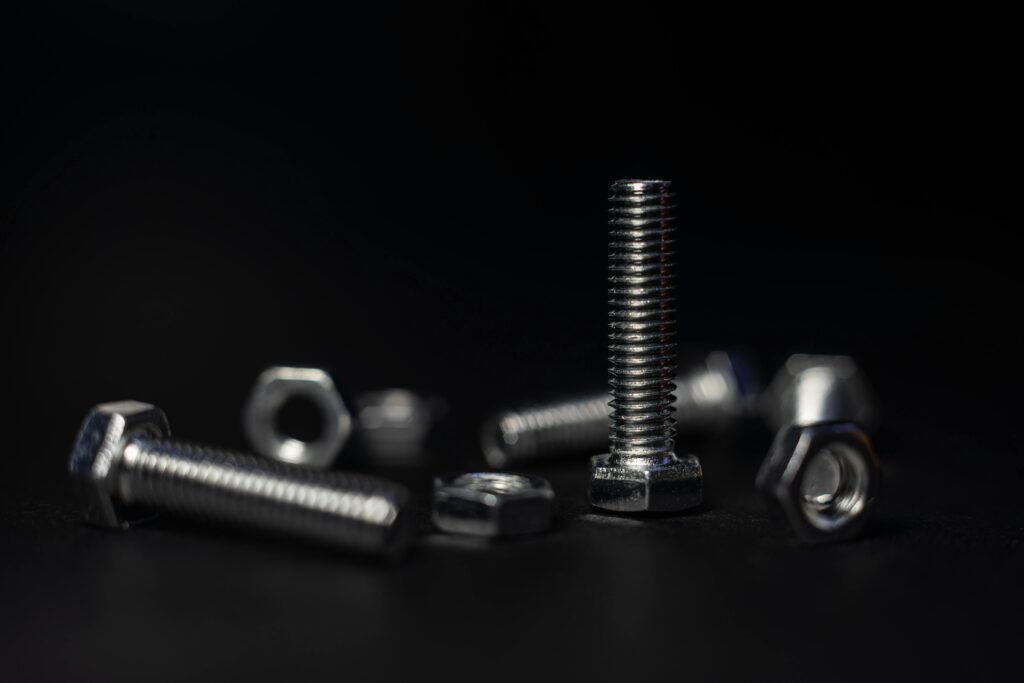
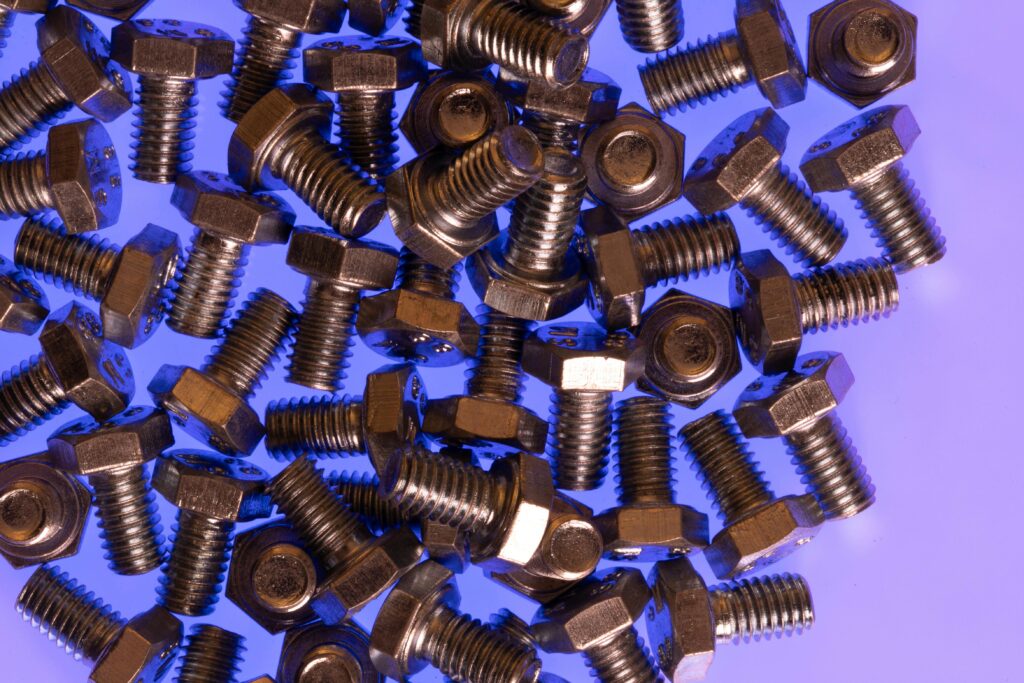
  • Bolts: These typically feature an external thread and are used in conjunction with a nut to secure materials. They pass through clearance holes and offer exceptional strength and reliability, commonly found in structural joints and flanges.
  • Screws: Unlike bolts, screws usually thread directly into a material or a pre-tapped hole without needing a separate nut. They are versatile, working across wood, plastic, and metal applications, and are quick to install.
  • Nuts: These are internally threaded partners to bolts, essential for creating a secure clamping force. They come in various shapes and thread configurations, including locking nuts for vibration resistance and flange nuts for better load distribution.
  • Washers: Placed beneath bolt heads or nuts, washers distribute the load evenly, protect surfaces from damage, and help prevent loosening due to vibration over time.
  • Studs: Threaded on both ends, one end is typically fixed into a material, while the other receives a nut. They are used in high-load flanged joints and assemblies that require frequent disassembly to reduce thread wear 
  • threaded Inserts: These create strong internal threads in materials that cannot hold threads on their own, often used in plastics, wood, and thin metals.

2. Non-Threaded Fasteners: Permanent and Semi-Permanent Solutions

These fasteners rely on deformation or geometric interference rather than thread engagement. They are often permanent or semi-permanent, providing robust connections that resist vibration and offer alignment.

  • Rivets: Permanent fasteners that deform (expand) to lock parts together. They are common in sheet metal, aerospace skin assemblies, and structural frameworks, especially where access is limited to one side of the material.
  • Anchors: Used to fasten objects into solid surfaces like concrete or masonry, they work by expanding or gripping mechanically to provide strong holding power 
  • Pins: These align components, allow rotation, or secure parts in place without threads. They are commonly used in machinery for precise alignment. This category includes dowel pins for precision alignment and cotter pins for security locking.
  • Clips and Clamps: Often used for temporary or semi-permanent fastening, providing quick installation and removal. They are ideal for holding cables, hoses, or panels.
  • Snap Rings / Retaining Rings: These provide axial retention on shafts or in bores, securing components with light axial loads.

Fastener Materials and Corrosion Resistance

The material of a fastener is just as crucial as its type, influencing its strength, durability, and resistance to environmental factors.

  • Carbon Steel: The most common and cost-effective material, available in various strength grades. However, it requires coatings like zinc plating or hot-dip galvanizing for corrosion resistance, as bare carbon steel easily rusts
  • Stainless Steel (304, 316): Preferred for applications requiring corrosion resistance. 304 (A2) offers good resistance, while 316 (A4) provides superior resistance to chlorides and pitting, making it suitable for marine or chemical environments. Both have lower tensile strength compared to heat-treated alloy steel.
  • Alloy Steel: Heat-treated alloy steel forms the basis for high-strength fasteners (e.g., Grade 10.9, 12.9) with tensile strengths up to 1,200 MPa. Like carbon steel, it requires protective coatings for corrosion resistance.
  • Aluminum: Lightweight and corrosion-resistant, often used in applications where weight reduction is critical.
  • Brass: Chosen for its conductivity and corrosion resistance, particularly in electrical applications.
  • Titanium: Offers exceptional strength-to-weight ratio and excellent corrosion resistance, primarily used in specialized industries like aerospace due to its high cost.
  • Plastic: Used in lightweight, low-load applications where metal is unsuitable.
 

Fastener Strength Grades and Standards

Understanding strength grade markings is essential, as they encode the mechanical properties of the fastener. Ignoring or substituting grades without verification can lead to structural failures.

  • ISO 898-1 Property Classes (e.g., 8.8, 10.9, 12.9): These two-number designations for carbon and alloy steel bolts indicate the minimum tensile strength (first number × 100 in MPa) and the ratio of yield strength to tensile strength (second number / 10). For example, a “10.9” bolt has 1,000 MPa tensile strength and 900 MPa yield strength.
  • SAE Grades (e.g., Grade 5, Grade 8): Used in North America and often identified by radial lines on the bolt head. Grade 5 is roughly equivalent to ISO 8.8, and Grade 8 to ISO 10.9.
  • ASTM Structural Bolt Standards (e.g., A325, A490, F3125): These are specifically designed for structural steel construction, with defined properties for slip-critical and bearing-type connections.

Substituting a lower grade fastener where a higher grade is specified can reduce the safety factor significantly, potentially leading to catastrophic failure. Conversely, using an unnecessarily high-grade fastener might introduce issues like reduced ductility.

Why Choosing the Right Fastener Matters

The correct fastener selection ensures your projects achieve:

  • Strong, Secure Connections: Able to hold under stress and resist forces like tension, shear, and bending.
  • Long-Term Durability and Performance: Preventing issues like loosening due to vibration, corrosion, or fatigue
  • Safety and Reliability: Essential across all industries, from automotive and aerospace to construction and electronics.

Using an incorrect fastener can lead to loose connections, surface damage, and complete structural failure. Mistakes like choosing the wrong size or thread pitch, mixing metric and SAE types, or overlooking material compatibility can be costly and dangerous.

Key Considerations for Fastener Selection

Before you acquire fasteners for your project, evaluating these factors will help you make an informed decision:

  1. Material: Match the fastener material (e.g., stainless steel, alloy steel) to the environmental conditions (indoor, outdoor, corrosive) and strength requirements.
  2. Size and Length: The dimensions must precisely match your application and material thickness.
  3. Thread Type: Coarse threads offer speed, while fine threads provide precision and higher preload capacity.
  4. Application: Consider what materials you are fastening (wood, metal, composite) and the type of load (tensile, shear, bending, or dynamic) the joint will experience.
  5. Removability vs. Permanence: Decide if the joint needs to be disassembled for maintenance (e.g., bolts) or if a permanent connection is preferred (e.g., rivets).
  6. Preload and Torque: For threaded fasteners, achieving the correct preload through proper torque is critical for preventing fatigue failure and ensuring joint integrity.
  7. Coatings and Surface Finishes: To enhance corrosion resistance or other performance characteristics.


Applications Across Industries

Fasteners are indispensable in nearly every industry, providing safe, reliable, and serviceable connections:

  • Construction: Used in structural frameworks, roofing, and wall assemblies, ensuring buildings are stable and durable.
  • Automotive: Crucial for assembling engines, chassis components, and body panels, designed to withstand vibration and heat.
  • Aerospace: Fasteners must meet strict standards for strength, weight, and reliability under extreme stress and vibration.
  • Electronics and Appliances: Secure delicate components and circuit boards, often small and precise.
  • Manufacturing and Industrial Equipment: Keep machines aligned and stable, crucial for production lines and safety systems.
  • Marine: Fasteners must resist corrosion from saltwater and harsh weather conditions.
  • Furniture and Interior Systems: Assemble frames, panels, and adjustable components.

Conclusion: Building Connections That Last

Fasteners may seem humble, but their role in the safety, strength, and longevity of almost every product and structure is fundamental. From small electronic devices to massive industrial systems, the right fastener makes all the difference in maintaining joint integrity.

By understanding the types, materials, strength grades, and specific applications of fasteners, you can make informed decisions that prevent costly mistakes and ensure lasting results for all your projects. Master the basics, choose wisely, and you’ll build connections that endure.