Different Types of Nuts
A Comprehensive Guide to the Different Types of Hardware Nuts
When it comes to construction, machinery, or even simple DIY home projects, fasteners are the unsung heroes that hold our world together. While bolts and screws often get the most attention, they would be practically useless without their vital counterpart: the nut.
At King Fasteners, we know that choosing the right hardware is critical to the safety, durability, and success of any project. But with so many variations available on the market, how do you know which one to choose?
In this guide, we will break down the most common types of hardware nuts, their unique features, and their best applications.
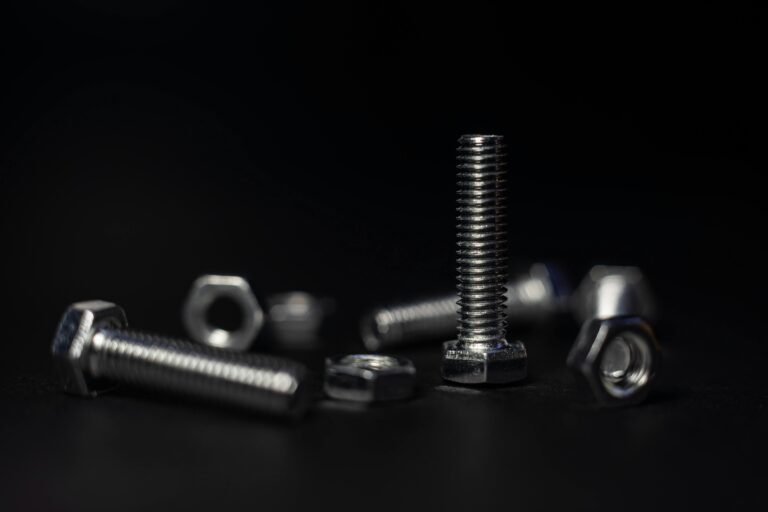
1. Hex Nuts (Hexagon Nuts)
The hex nut is the industry standard. As the name suggests, it has a six-sided hexagonal shape, making it incredibly easy to grip with a wrench from almost any angle.
-
Best for: General-purpose fastening in construction, automotive, and everyday machinery.
-
Pro-Tip: If you are dealing with high-stress or heavy structural applications, look for Heavy Hex Nuts, which are slightly larger and thicker to handle more load.
2. Lock Nuts (Nyloc Nuts)
Vibration is the enemy of a secure joint. Standard nuts can slowly loosen over time when subjected to constant movement. Lock nuts, specifically Nylon Insert Lock Nuts (Nyloc nuts), feature a synthetic collar inside the thread. As the bolt is driven in, it cuts into the nylon, creating a tight, high-friction grip that prevents backing off.
-
Best for: Automotive parts, industrial machinery, and appliances subject to heavy vibrations.
3. Flange Nuts
Flange nuts look like a standard hex nut but with a built-in, washer-like base (the flange). This wide base distributes the pressure of the nut over a larger surface area, preventing damage to the material being fastened and reducing the chance of loosening. Some flange nuts feature a serrated bottom for extra locking power.
-
Best for: Assembly lines, automotive manufacturing, and oversized holes.
4. Wing Nuts
Need to adjust a fastener on the fly? Wing nuts feature two large “wings” on either side, allowing them to be easily tightened or loosened by hand without the need for tools.
-
Best for: Applications requiring frequent adjustments or removals, such as camera tripods, musical instruments, and temporary assemblies.
5. Cap Nuts (Acorn Nuts)
Cap nuts feature a smooth, domed top that covers the exposed threads of the bolt. This serves a dual purpose: it protects the bolt threads from rust and damage, and it protects users from getting scraped by sharp, exposed metal.
-
Best for: Decorative applications, outdoor furniture, and playground equipment where safety and aesthetics are a priority.
6. Coupling Nuts
Coupling nuts are essentially elongated hex nuts. Instead of fastening a bolt to a surface, they are used to connect two threaded rods together end-to-end, extending their length.
-
Best for: Plumbing, suspended ceilings, and structural tie-rod extensions.
7. Square Nuts
Before the hex nut became the standard, the four-sided square nut was the king of fasteners. Today, they are still used in specific scenarios. Their flat sides provide a larger surface area in contact with the part being fastened, which provides high resistance to loosening. They are also easier to grip with pliers in tight, blind spots.
-
Best for: Furniture manufacturing, railway lines, and rustic/antique restorations.
8. Slotted and Castle Nuts
These nuts have slots cut into their top edge, resembling the battlements of a castle. They are used in conjunction with a bolt that has a pre-drilled hole in its shank. Once the nut is tightened, a cotter pin or safety wire is driven through the slots and the bolt hole, locking the nut firmly in place.
-
Best for: Critical automotive applications (like wheel bearings) and aerospace engineering where a failure could be catastrophic.
Choosing the Right Material
Selecting the correct shape is only half the battle. The material of the nut is equally important. At King Fasteners, we offer nuts in various grades and materials, including:
-
Stainless Steel: Excellent corrosion resistance, perfect for outdoor or marine environments.
-
Carbon Steel / Alloy Steel: High tensile strength for heavy-duty structural applications.
-
Brass: Corrosion-resistant and electrically conductive, often used in electrical applications.
Quality You Can Trust with King Fasteners
The integrity of your project relies on the quality of your fasteners. Whether you are building a skyscraper, assembling a vehicle, or working on a home renovation, King Fasteners is dedicated to providing top-tier, reliable, and precision-engineered fastening solutions.
Ready to secure your next project? Browse our extensive catalog or reach out to our expert team at King Fasteners to find the perfect fit for your specific needs.